Few things are more frustrating than a garage door that just won't cooperate. You press the button, it starts to close, and then — nothing. It stops halfway, reverses back up, or just refuses to budge past a certain point. If this sounds familiar, you're not alone. It's one of the most common calls we get, and the good news is that most of the causes are straightforward to diagnose and fix. Here are the most likely reasons your garage door won't close all the way
2026-05-17
How to Test Your Garage Door's Balance (And Why It Matters)
Most homeowners never think about their garage door's balance — until something goes wrong. A door that's even slightly out of balance puts extra strain on your opener every single day, wearing it out years ahead of schedule. The good news is testing the balance takes about two minutes and requires zero tools.
Here's how to do it.
Why Balance Matters
Your garage door is heavy — most residential doors weigh between 150 and 250 pounds. The torsion spring above the door is wound under enormous tension specifically to counteract that weight, making the door feel nearly weightless as it moves up and down.
When the spring is properly calibrated, the door and the spring are in balance. Your opener barely has to work. When the spring is off — whether from wear, a partial break, or improper adjustment — the opener has to compensate for the imbalance on every single cycle. That's how a $400 opener dies after three years instead of ten.
An unbalanced door also puts uneven stress on the cables, rollers, and hinges, accelerating wear across the entire system.
The Balance Test — Step by Step
1. Close the door and disconnect the opener. Pull the red emergency release cord hanging from the opener trolley. This puts the door in manual mode so the opener isn't masking any imbalance.
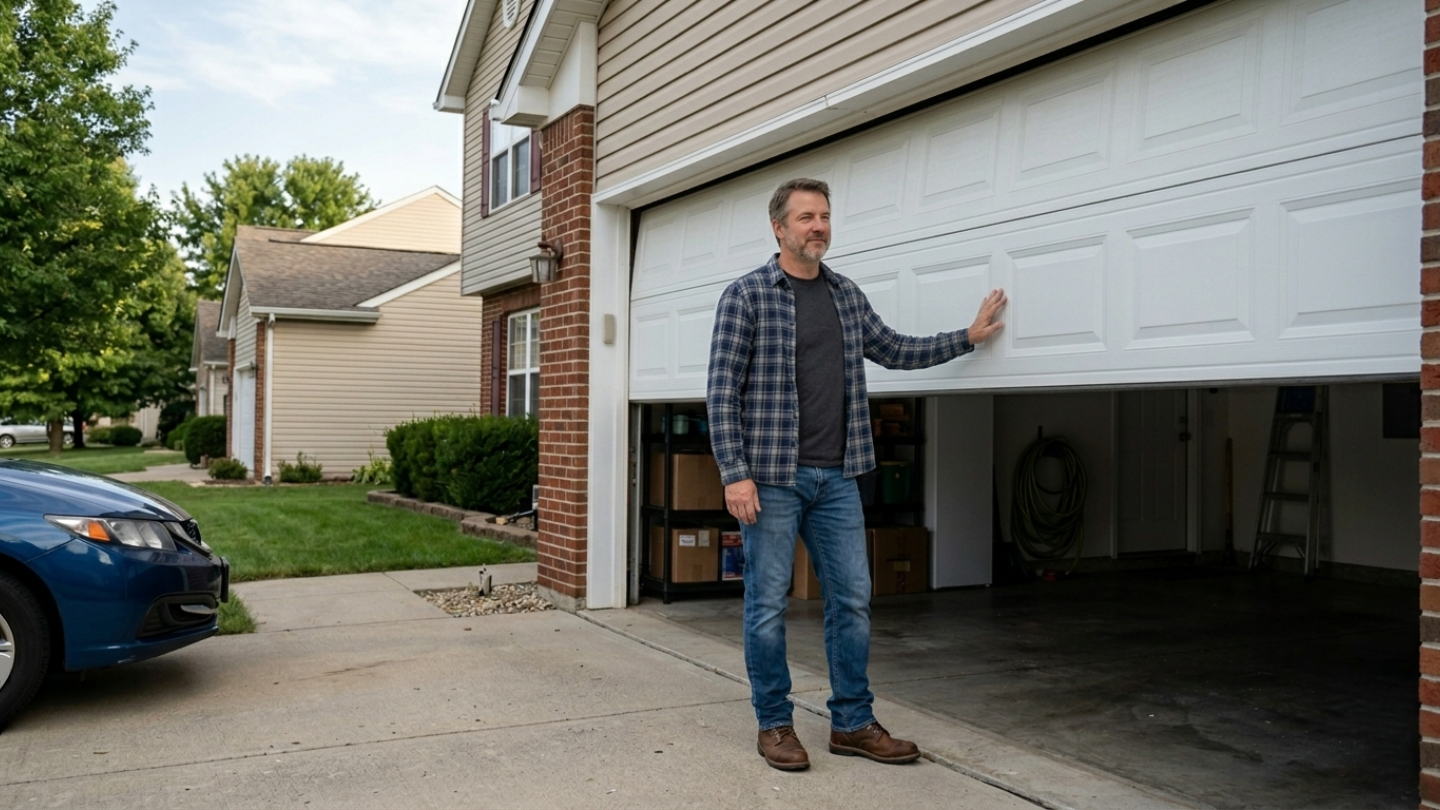
2. Manually lift the door to about waist height — roughly three to four feet off the ground. Use both hands and lift from the bottom of the door. It should feel relatively light. If it feels like you're deadlifting it off the ground, that's already a sign your spring isn't doing its job.
3. Let go and step back.
This is the test. Watch what happens:
- Door stays put — your door is balanced. The spring tension is correctly counteracting the door's weight.
- Door slowly drifts down — the spring is under-tensioned and losing its ability to support the door's weight. Your opener is working harder than it should on every close cycle.
- Door shoots upward — the spring is over-tensioned. Your opener is fighting against it on every open cycle.
A perfectly balanced door will hold its position mid-travel without moving more than an inch or two in either direction. Some slight movement is normal — a door that drifts more than a few inches is telling you something.
4. Reconnect the opener when you're done. Lift the door slightly to re-engage the trolley, then pull the release cord back toward the door until you hear it click back into place.
What the Results Mean
If your door passed — great. Make a mental note to retest it every six months or so. Spring tension gradually decreases over time as the spring goes through thousands of cycles, so a door that's balanced today may drift out of balance a year from now.
If your door failed the test, the spring tension needs to be adjusted. This is where the DIY road ends.
When to Call a Pro
Torsion spring adjustment is not a homeowner repair. The springs above your door are under hundreds of pounds of tension — when they're wound or unwound incorrectly, they release that energy violently. It's one of the more dangerous repairs in residential home maintenance, and it's the reason most hardware stores don't even sell the winding bars required to do it.
If your balance test showed a problem, the fix is usually straightforward for a trained technician — a spring tension adjustment or a full spring replacement if the spring is worn. It's not an expensive repair, and it extends the life of every other component on the door.
Don't ignore a door that failed the balance test. A spring that's struggling today is a spring that breaks tomorrow — usually at the least convenient moment possible.
If your door failed the balance test and you're in Central Michigan, Isabella Garage Door can diagnose and correct the issue quickly. We serve homeowners throughout Isabella, Gratiot, Clare, and Mecosta counties. Call or text anytime at 989-572-0303.
Raising Performance. Elevating Standards.