Common noises your garage door makes and what they mean
2026-09-29
Loose Garage Door Bolts: Why They Cause Problems and How to Fix Them
Here's something most homeowners don't know: a garage door that's acting up — closing unevenly, making noise, reversing before it should, or just feeling off — isn't always a spring issue or an opener problem. Sometimes the culprit is a handful of loose bolts that have been vibrating themselves free for years.
It's one of the more satisfying diagnoses in the trade, because the fix is simple, inexpensive, and something most homeowners can do themselves with a socket wrench and twenty minutes.
Why Bolts Come Loose in the First Place
A garage door is a mechanical system that cycles thousands of times over its lifespan. Every open and every close sends vibration through the door panels, the hinges, the tracks, and every bolt holding everything together. Over time, that constant vibration works fasteners loose — slowly, incrementally, in a way that's easy to miss until the problem becomes obvious.
It's the same reason the lug nuts on your car get checked periodically, or why deck screws need attention after a few seasons. Vibration is relentless and patient. It doesn't strip a bolt in a day — it just backs it out a little at a time until one morning you notice the door isn't sitting right and you can't figure out why.
Hinge bolts and strut bolts are the two most common offenders on a residential garage door, and they affect the door's function in different ways when they come loose.
What Loose Hinge Bolts Do
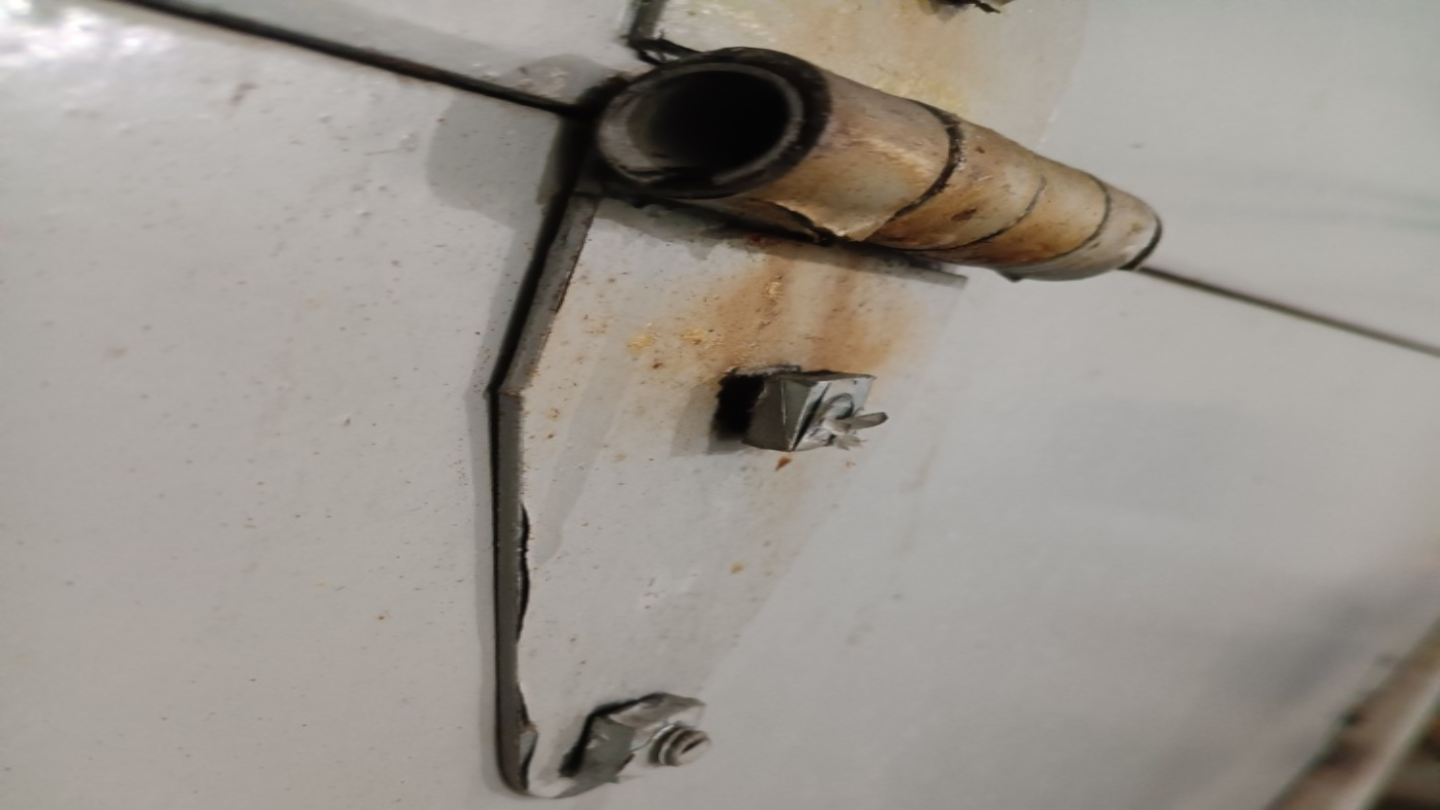
Hinges are the brackets that connect the door's individual sections together and allow them to flex as the door travels around the curved portion of the track. Each hinge has multiple bolts — typically carriage bolts — that pass through the door panel and are secured with nuts on the inside face.
When hinge bolts come loose, the hinge starts to shift and flex in ways it wasn't designed to. A door section that should be rigid starts to move independently. The door can rack — meaning one side gets slightly out of alignment with the other — which causes it to bind in the tracks, close unevenly, or trigger the opener's resistance sensor and reverse before fully closing.
Loose hinges also put extra stress on the door panels themselves. A hinge that's flopping around transfers force directly to the panel material around the bolt holes instead of distributing it across the full hinge. Over time this can elongate the bolt holes or crack the panel — a more expensive problem than a loose bolt.
What Loose Strut Bolts Do
Struts are the horizontal steel reinforcement bars that run across the back of the door panels — typically across the top section and sometimes additional sections on wider or heavier doors. Their job is to keep the door panels rigid and prevent them from bowing or flexing under the weight of the door itself and the force of the spring system.
When strut bolts come loose, the panel they're supposed to reinforce starts to flex. On a wide door this can cause the middle of the panel to bow inward or outward, which creates binding in the tracks, gaps in the weatherstripping when closed, and uneven stress on the panel over time. A door that seems to close fine in summer but gaps at the center in winter is often dealing with a strut that's lost its bolts and is no longer holding the panel flat.
Loose strut bolts also allow the strut to shift position, which can throw off the alignment between the strut and the spring hardware above the door — a small shift that creates wear in places it shouldn't.
How to Inspect Your Hardware
You don't need any special tools to do a basic hardware inspection — just a socket wrench set and a few minutes.
Start with the hinges. Work your way down both sides of the door with the door in the closed position. Try to wiggle each hinge by hand. A tight hinge won't move at all. A loose one will have noticeable play. Look at the bolt holes — if the holes look elongated or the panel material around them looks cracked or compressed, the hinge has been loose long enough to cause some wear.
Check the struts. Look at the back of the top panel — the reinforcement bar that runs horizontally across it. Try to wiggle it. Run your finger along the bolt line and feel for any bolts that are obviously proud of the surface or visibly backed out.
Look at the track brackets. While you're at it, give the brackets that mount the vertical tracks to the wall a look. These carry a lot of load and loosen over time just like everything else. Try to move each bracket by hand.
How to Tighten Everything Properly
A socket wrench is the right tool for this job. Avoid an impact driver — it makes it too easy to overtighten, which is a real problem on garage door hardware.
Snug, not gorilla-tight. The goal is firm contact between the nut and the panel surface with no play. You're not trying to compress the panel material or max out the threads. On a carriage bolt, the head should be flush with the outside face of the panel and the nut on the inside should be seated firmly. If you can still wiggle the hinge after tightening, the bolt holes may be elongated and the bolt is no longer able to get purchase — more on that below.
Work in order. Go hinge by hinge, panel by panel, rather than jumping around. This lets you track where you've been and catch anything you might miss.
Don't skip the lag bolts. Track brackets are typically mounted to the wall with lag screws into wood framing. These can strip their holes over time, especially if the bracket has been loose for a while. If a lag screw turns freely without tightening, it's stripped — the hole needs to be filled and re-drilled, or the bracket needs to be moved slightly to hit fresh wood.
When to Call a Pro
Most of this job is genuinely DIY-friendly. But a few situations warrant a second opinion:
Elongated bolt holes. If the bolt holes in the door panels have worn oval-shaped from a hinge that's been loose too long, a standard bolt won't grip properly anymore. This sometimes requires a larger bolt, a backing plate, or panel repair depending on how bad the damage is.
Cracked panel material. Stress cracking around hinge bolt holes can compromise the structural integrity of the panel section. A cracked panel that's load-bearing needs professional assessment.
Anything involving the bottom brackets. The bottom corners of the door connect to the lift cables, which are under tension from the spring system. Leave the bottom bracket hardware alone — that's not a DIY area.
A socket wrench and twenty minutes is all it takes to rule out loose hardware as the source of a garage door problem. It's worth doing as part of your regular maintenance routine even if nothing seems wrong — catching a bolt that's halfway out is much easier than diagnosing the symptoms that show up after it falls out completely.
If your inspection turns up elongated holes, cracked panels, or anything involving the cable hardware, Isabella Garage Door serves homeowners throughout Isabella, Gratiot, Clare, and Mecosta counties — including Mt. Pleasant and the surrounding area. Call or text anytime at 989-572-0303.
Raising Performance. Elevating Standards.
You May Also Like
The Strange Noises Your Garage Door Makes
How Long Does Garage Door Spring Replacement Take?
Your garage door spring just broke, you're probably wondering: how long is this going to take? The short answer is that a straightforward torsion spring replacement takes between 45 minutes and 90 minutes once the technician arrives.
Tips for Staging Your Home and Garage for a Faster Sale
Learn how to influence a buyers decision