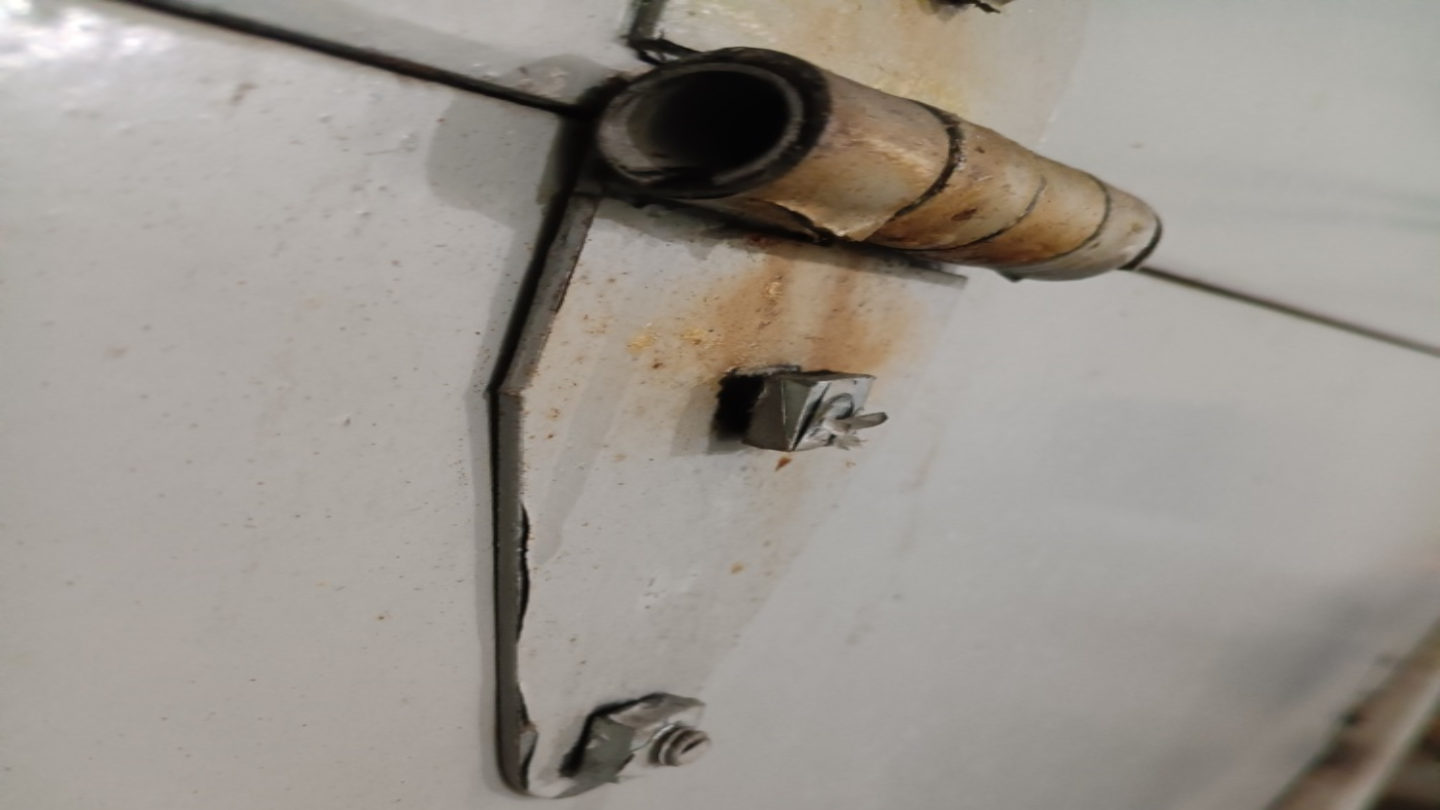
Every open and every close sends vibration through every bolt holding everything together. That constant vibration works fasteners loose.
2026-03-01
Why Won't My Garage Door Close All the Way?
Published by Isabella Garage Door · Serving Central Michigan
Few things are more frustrating than a garage door that just won't cooperate. You press the button, it starts to close, and then — nothing. It stops halfway, reverses back up, or just refuses to budge past a certain point. If this sounds familiar, you're not alone. It's one of the most common calls we get, and the good news is that most of the causes are straightforward to diagnose and fix.
Here are the most likely reasons your garage door won't close all the way, starting with the simplest things to check yourself.
1. Something Is Blocking the Safety Sensors
This is the first thing to check — and it's the culprit more often than you'd think.
Most garage doors built after 1993 have safety sensors mounted near the bottom of the tracks on each side. They send an invisible beam across the opening. If anything interrupts that beam — a box, a bike, a garden hose, even a spider web — the door won't close. It's a safety feature, and it works exactly as intended.
What to check:
- Make sure nothing is sitting in the door's path
- Look at the sensor lights. Most have a green light on one side and an amber light on the other. If either light is off or blinking, the sensors are misaligned or obstructed
- Wipe the sensor lenses with a dry cloth — dirt and dust can block the signal
- Check that both sensors are aimed directly at each other. Even a slight bump can knock them out of alignment
If the lights come back on solid after cleaning or adjusting, try closing the door again. This fixes the problem more often than not.
2. The Close Limit Switch Needs Adjustment
Your opener has a setting called the close limit — it tells the door how far down to travel before stopping. If that setting is off, the door might stop short of the floor, or it might hit the ground and then reverse because the opener thinks it hit an obstruction.
This is usually an easy fix. Most openers have adjustment screws or settings in the app that control travel limits. Check your opener's manual for instructions, or give us a call and we can walk you through it.
3. The Tracks Are Bent or Blocked
The metal tracks that guide your door on each side need to be clean, clear, and properly aligned. If a track is bent, dented, or has debris built up inside it, the door can get stuck or stop at an odd point.
Run your eyes along both tracks and look for anything obvious — a dent, a section that looks pulled away from the wall, or dirt and grime buildup. Minor debris can sometimes be wiped out. Bent or misaligned tracks usually need a professional to straighten safely.
4. The Springs Are Worn or Broken
If your door stops partway down and feels heavy when you try to move it manually, worn or broken springs are likely the issue. Springs counterbalance the weight of the door, and when they lose tension the opener struggles to control the door's movement all the way through its travel.
A door that's fighting against bad springs will often stop, reverse, or move unevenly. If you noticed the problem come on suddenly — especially after hearing a loud bang from the garage — there's a good chance a spring snapped.
Spring replacement is not a DIY job. The springs are under significant tension and require the right tools to work on safely. But it's a common repair and usually a quick one for a technician.
5. The Opener's Force Settings Are Off
Your opener has sensitivity settings that control how much resistance it will push through before deciding something is wrong and stopping. If the force is set too low, the door might stop before it reaches the floor because the opener thinks it hit something — even when it didn't.
This can also happen as openers age and components wear. If your opener is older and starting to act finicky, it may be worth having it looked at to see if a tune-up or replacement makes more sense.
6. The Weather Seal Is Catching
This one is easy to overlook. The rubber seal along the bottom of your door can stiffen and crack in cold Michigan winters, or it can become compressed and sticky in summer heat. If the seal is dragging hard on the floor or folding under the door, it can create enough resistance to trigger the opener's safety reversal.
Take a look at the bottom seal. If it's cracked, torn, or bunched up, a replacement seal is an inexpensive fix that can solve the problem immediately.
Still Not Sure What's Going On?
Sometimes it takes a little more digging to figure out exactly what's happening with your door. That's what we built DoorDiagnosis™ for.
👉 Try DoorDiagnosis™ — answer a few quick questions about what your door is doing and we'll help you pinpoint the problem in less than a minute.
And if you'd rather just have someone come take a look, we're always happy to help. Give us a call or text and we'll get you taken care of.
— The Isabella Garage Door Team Serving Mt. Pleasant, Clare, Alma, Coleman, Shepherd & all of Central Michigan
You May Also Like
Loose Garage Door Bolts: Why They Cause Problems and How to Fix Them

Is Your Garage Door Ready for Memorial Day Weekend?
It's Memorial Day weekend and the last thing you want is a garage door that decides to quit on you — or worse, one that creates a hazard when you've got guests and kids around. A few minutes of prep before the long weekend can save you a lot of headache.

Garage Door Opener Types: Chain vs Belt vs Side Mount - Which Is Best
Choosing the right opener for your Central Michigan home