Learn how to influence a buyers decision
2026-06-15
Garage Door Cable Snapped? Here's What Happened and What to Do Next
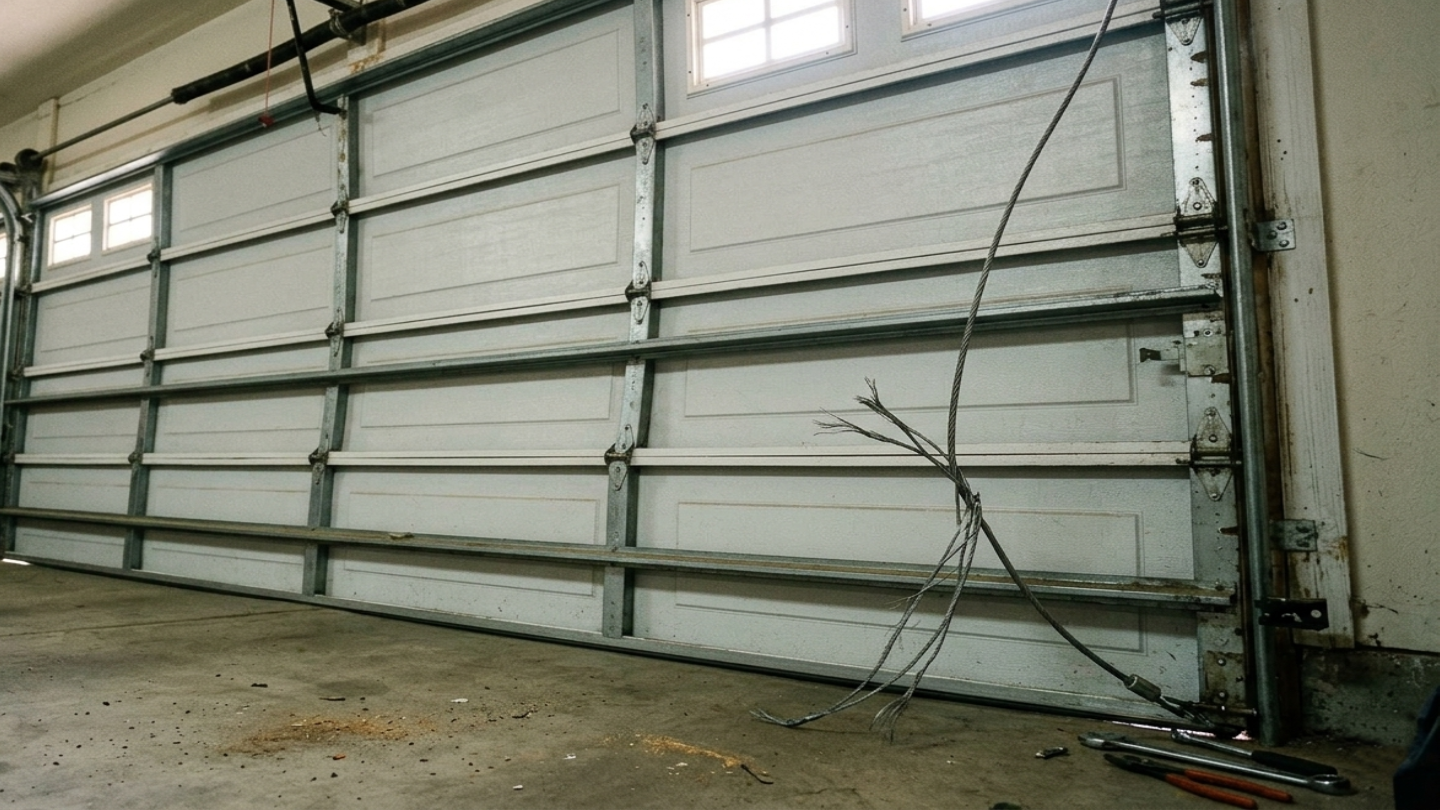
You went to open your garage door and something was immediately wrong. Maybe the door went up crooked and stopped. Maybe it sagged on one side. Maybe you heard a loud snap and now there's a cable hanging loose along the side of the door. Whatever tipped you off, you're now standing in your garage trying to figure out what just happened and what to do about it.
Here's everything you need to know.
What Garage Door Cables Actually Do
Most homeowners don't think about their garage door cables until one breaks — which is understandable, because they're not the most visible part of the system. But they're doing critical work every single time the door moves.
Your garage door cables are steel wire ropes that run from the bottom corners of the door up to drums mounted on either end of the torsion spring shaft above the door. When the spring winds and unwinds during operation, the cables transfer that stored energy into controlled, even lifting force. They're what keeps the door rising and lowering in a straight, balanced line rather than twisting or free-falling.
Think of the spring as the engine and the cables as the drivetrain. Without the cables doing their job, all that spring tension has nowhere to go in a controlled way.
Why Cables Break
Cables don't usually fail without reason. A few things cause them to snap or fray:
Normal wear over time. Steel cables go through thousands of cycles over their lifespan — every open and every close is one cycle. Over time, the individual wire strands that make up the cable fatigue and begin to break. A cable that's been in service for 7 to 10 years on a heavily used door may simply have reached the end of its useful life.
Rust and corrosion. Michigan winters are hard on garage hardware. Road salt in the air and moisture from snow and rain work their way into the garage and accelerate corrosion on the cables. A cable that looks intact from a distance may have significant internal rust weakening the individual strands.
Cable jumping the drum. Sometimes a cable doesn't snap but instead slips off the drum it's wound around. This usually happens when the cable has gone slack — often from a spring issue — and the drum keeps turning without the cable properly seated. The result looks similar: a door that won't open correctly and a cable hanging loose.
What to Do Right Now
Stop using the door. This is the most important thing. A door with a broken or compromised cable is unstable. The remaining cable is now carrying uneven load, and the door can drop suddenly or come off the tracks if operated. Don't try to manually lift it, don't try to run the opener, and if the door is partially open, don't walk under it.
Don't try to reattach the cable yourself. Garage door cables are under tension even when the spring appears relaxed. The bottom bracket — where the cable attaches at the corner of the door — is connected to the lift cable under significant load. Reattaching or replacing cables without the right tools and training is genuinely dangerous. This is a job for a technician.
Take note of what you saw. Did the door go up crooked before stopping? Did you hear the snap while the door was moving or while it was sitting still? Did the door drop suddenly? That information helps a technician diagnose whether it's an isolated cable failure or whether the spring also needs attention.
What the Repair Looks Like
Cable replacement is a straightforward repair for a trained technician. The old cable is removed, a new cable of the correct diameter and length is installed, wound onto the drum, and tensioned properly. If one cable broke, the technician will typically recommend replacing both — cables on the same door age at the same rate, and replacing only one leaves you with a mismatched pair that's likely to fail again soon.
If the spring is also broken or damaged — which a technician will check — that work is usually done at the same time. Springs and cables are a system, and addressing both together saves you from a second service call a short time later.
How to Avoid This Next Time
Here's the part most people skip — and the part that actually saves money over time.
Cables give warning signs before they fail completely. The problem is most homeowners aren't looking for them. A few minutes of inspection every six months can catch a cable that's beginning to fray before it snaps at an inconvenient moment.
What to look for:
- Fraying or unraveling — visible broken strands along the length of the cable, especially near the bottom bracket where wear concentrates
- Rust or discoloration — brown or reddish staining on the cable surface indicates corrosion working its way through the strands
- Kinking or unusual bends — a cable that's been stressed or jumped a drum may show kinks that weaken the wire
- Uneven door movement — a door that rises slightly crooked or seems to strain on one side is often showing early cable or spring imbalance
If you see any of these, the cable doesn't need to have snapped yet to warrant replacement. Getting ahead of it is almost always cheaper than waiting for the failure.
A full garage door inspection — which should include the cables, springs, rollers, hinges, tracks, and opener — catches developing issues before they become emergency repairs. It's the single best investment you can make in a garage door system that's more than five years old.
Cables are one of those components that work quietly in the background for years and then fail in a way that makes the whole system stop. If yours just broke, or if it's been a while since anyone looked at your door's hardware, Isabella Garage Door serves homeowners throughout Clare, Alma, Midland, Mount Pleasant and all of Central Michigan. Call or text anytime at 989-572-0303.
Raising Performance. Elevating Standards.
You May Also Like
Tips for Staging Your Home and Garage for a Faster Sale
Garage Door Openers 101: What Every Homeowner Should Know
What homeowners should know about their garage door opener

Planning a Garage Sale? Things To Be Mindful Of With Your Garage Door
From broken springs to malfunctioning openers, learn about the most common garage door issues Michigan homeowners face and how Isabella Garage Door can help.