
Why MyQ may be right for you
2026-05-03
Can You Install a Garage Door Opener Yourself? Here's What to Check First
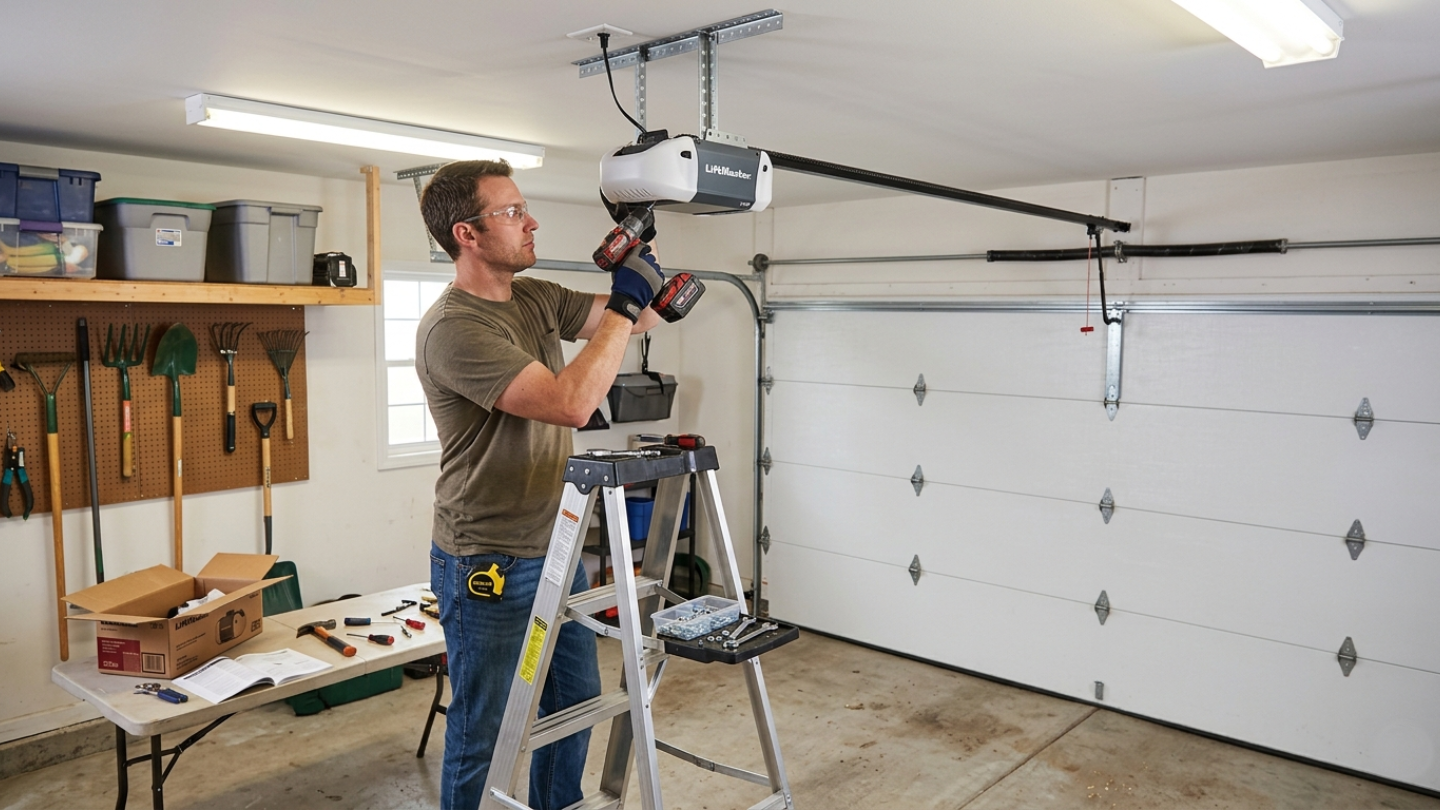
If you're handy and you've got a free Saturday, installing a garage door opener is probably within your ability. The instructions that come in the box are actually pretty decent, and for a straightforward installation, most people can follow them from start to finish without much trouble.
But here's what I see as a garage door professional in Central Michigan: the install itself rarely causes problems. What causes problems is starting the install before the door is ready for it. A brand new opener on a door that isn't in good shape is a recipe for frustration — or worse, a repair call that costs more than just having someone assess things up front.
So before you drive to Costco and pick up that Chamberlain, run through this checklist.
1. Is Your Door Balanced?
This is the big one. Disconnect your current opener (or if you don't have one, just work the door manually) and lift it halfway up. Let go. A properly balanced door should stay put — or close to it. If it crashes down or rockets up, your springs need attention before anything else. A new opener will struggle against an unbalanced door and wear out faster than it should.
2. What Condition Are Your Springs In?
Take a look at your torsion spring — that's the large spring mounted horizontally above the door — or your extension springs running along the sides. Look for gaps in the coils, rust, or visible wear. If a spring is on its way out, it will likely go during or shortly after the install. Springs are under serious tension and aren't something to leave to chance.
3. Do You Have Enough Header Clearance?
Your opener needs room to mount and operate above the door. Most standard openers need at least 2 inches of clearance above the door's highest point in its travel. Low-clearance situations aren't a dealbreaker — there are openers designed for them — but you need to know what you're working with before you buy.
4. Is There a Power Outlet in the Ceiling?
Seems obvious, but it gets overlooked. Your opener needs a standard outlet within reach of the power cord — usually within about 6 feet of where the unit will mount. Running an extension cord as a permanent solution isn't safe and won't pass inspection. If there's no outlet up there, you'll need one added before the opener goes in.
5. Does the Rest of Your Hardware Look Solid?
Rollers, hinges, cables, tracks — give everything a look. A new opener doesn't fix worn hardware, and worn hardware will show its problems quickly once the door starts cycling more regularly. It doesn't all need to be new, but it shouldn't be on its last leg either.
So Should You DIY It?
If you ran through that list and everything checks out — door's balanced, springs look good, clearance is there, outlet is in place, hardware is solid — then yeah, you're probably in good shape to tackle it yourself. Budget a few hours, read the instructions thoroughly, and take your time.
If something on that list gave you pause, it's worth getting a professional set of eyes on it before you invest in an opener. A quick assessment can tell you exactly what you're working with and save you from a half-finished project on a Saturday afternoon.
If you're in Isabella, Gratiot, Clare, or Mecosta County and want someone to take a look before you buy, give me a call. That's what I'm here for.
Isabella Garage Door serves homeowners across Central Michigan. Call or text anytime.
You May Also Like
Why MyQ Smart Garage Openers Are a Smart Investment for Michigan Homeowners

Getting Your Garage Door Ready for Back to School
If your teenager enters through the garage after school, a quick safety check is essential. Here is a practical checklist to prep your garage door for the school year.

Is Your Garage Door Ready for Memorial Day Weekend?
It's Memorial Day weekend and the last thing you want is a garage door that decides to quit on you — or worse, one that creates a hazard when you've got guests and kids around. A few minutes of prep before the long weekend can save you a lot of headache.