Knowing how long each component is designed to last helps you anticipate problems before they become failures, budget for repairs and replacements, and make informed decisions.
2026-06-22
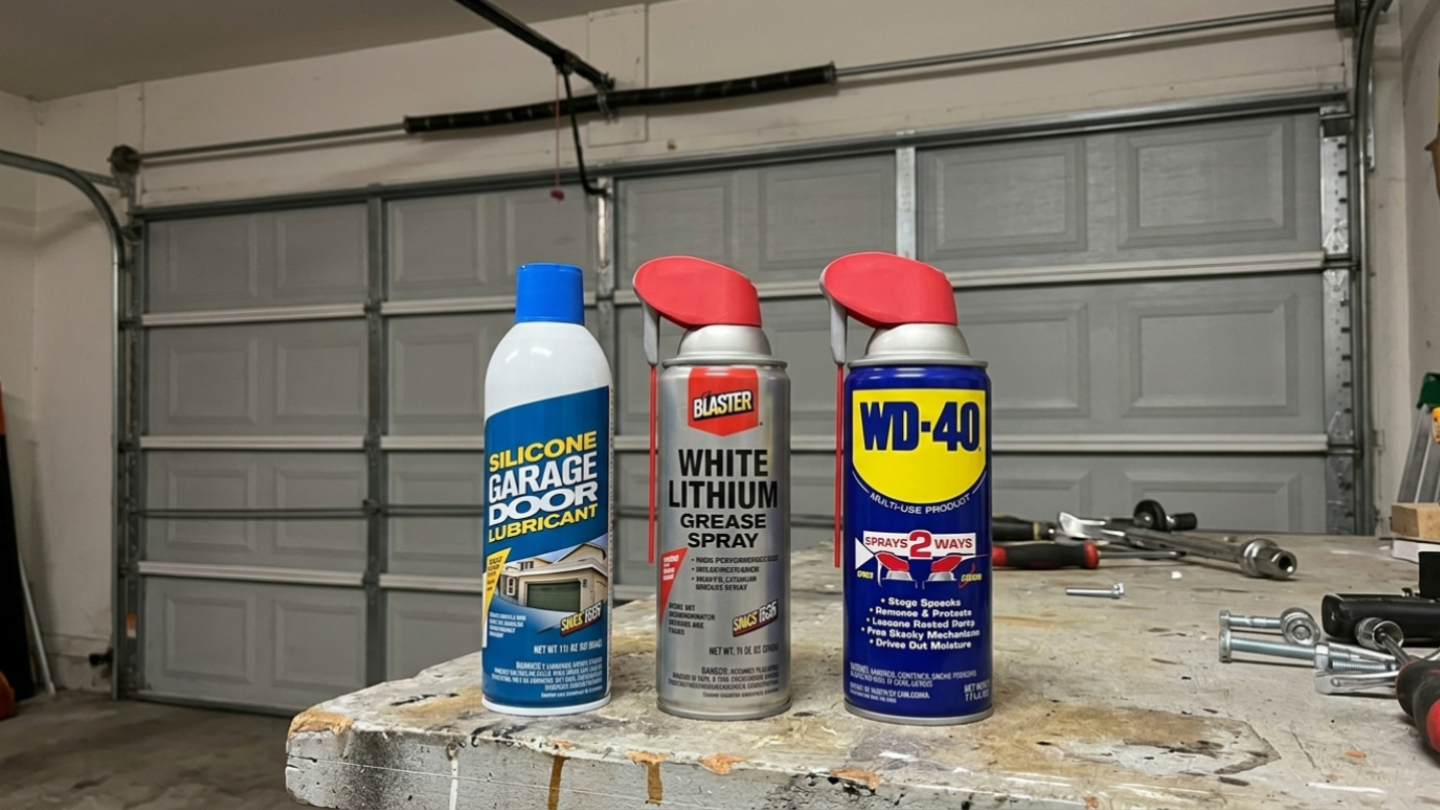
Silicone vs. White Lithium Grease — And Why WD-40 Doesn't Belong on Your Garage Door
Walk into any hardware store and you'll find an entire shelf of spray lubricants, each one promising to solve your squeaky, grinding, or sticky garage door problem. Most of them will work — for a while. But choosing the wrong product can actually make things worse over time, attracting dirt, degrading rubber components, or leaving you with the same noise problem a week later.
There are three products that come up constantly in conversations about garage door maintenance: silicone-based lubricant, white lithium grease, and WD-40. Two of them belong on your door. One of them doesn't — despite being the most recognizable name on the shelf.
Here's what you actually need to know.
What WD-40 Is (And What It Isn't)
WD-40 is one of the most misunderstood products in home maintenance. The name itself is a clue — WD stands for Water Displacement, and the 40 refers to the 40th attempt to perfect the formula. It was originally developed in the 1950s to prevent corrosion on aerospace components by displacing moisture.
It does that job extremely well. It also loosens rusted fasteners, removes adhesive residue, and cleans grime off metal surfaces. These are legitimate, useful applications.
What WD-40 is not, despite decades of being used this way, is a long-term lubricant.
The product is primarily a solvent carrier with a light petroleum-based oil. When you spray it on a squeaky hinge, it penetrates and loosens whatever is causing the friction, and the squeak goes away — temporarily. But the solvent evaporates within days, leaving behind a thin residue that actually attracts and holds dust, dirt, and debris. Over time, that buildup can make friction worse than it was before you treated it.
On a garage door, this is particularly problematic. The tracks, rollers, and hinges accumulate grime quickly, and adding a sticky residue to the mix accelerates wear on the very components you were trying to protect.
WD-40 also degrades certain rubber components on contact. The bottom seal and the weatherstripping around your door frame are both vulnerable — prolonged exposure can cause them to dry out, crack, and fail earlier than they otherwise would.
Use WD-40 for what it was designed for: displacing moisture, loosening stuck parts, and cleaning. Once a part is clean and moving freely, follow up with an actual lubricant.
White Lithium Grease
White lithium grease is a heavy-duty lubricant made from lithium soap thickened into a grease consistency, then typically delivered in an aerosol spray for easy application. It's been used in industrial and automotive applications for decades and handles high-load, metal-on-metal contact exceptionally well.
For garage doors, white lithium grease is the go-to product for components that bear significant weight or tension — specifically the torsion springs and the hinges.
Torsion springs are under hundreds of pounds of force every time the door moves. The coils flex and compress with each cycle, and without lubrication the metal fatigues faster and surface rust develops more readily. A light coat of white lithium grease along the coils provides lasting protection because the grease consistency stays in place rather than running off or evaporating.
Hinges — the metal brackets that connect the door sections and allow them to flex as the door bends around the curved portion of the track — are another ideal application. Hinges take direct impact and rotational load on every cycle, and white lithium grease handles that load well.
The tradeoff is that lithium grease is thick. Applied too heavily, it can collect dirt and become gummy over time. A thin, even coat is all that's needed — more is not better.
White lithium grease is not appropriate for plastic or rubber components. The petroleum base can degrade certain plastics and rubbers over time, which is worth keeping in mind if any of your rollers have plastic wheels.
Silicone-Based Lubricant
Silicone lubricant is a lighter, cleaner product that works differently than lithium grease. Rather than a heavy grease, it's a thin film lubricant that dries relatively quickly and leaves a slick, low-friction surface behind. It's chemically inert — meaning it won't react with or degrade plastic, rubber, or nylon.
That last property is what makes silicone the right choice for specific components on a garage door.
Nylon rollers are the most important application. Most modern residential garage doors come equipped with nylon rollers rather than steel, because nylon runs quieter and requires less maintenance. But nylon is also sensitive to petroleum-based products — white lithium grease can cause nylon to swell or degrade over time. Silicone lubricant is compatible with nylon and provides smooth, lasting lubrication without the risk of material damage.
Weatherstripping and rubber seals are another silicone application. Rather than lubricating them in the mechanical sense, silicone helps keep rubber flexible and resistant to cracking — particularly important in Michigan where temperature swings from winter to summer put significant stress on rubber components. Silicone is safe for rubber; petroleum-based products are not.
The Right Product for the Right Part
The short version of everything above:
White lithium grease — torsion springs, metal hinges, bearing plates, the opener's drive chain or screw (not belt drives)
Silicone lubricant — nylon rollers, rubber weatherstripping and bottom seal, any plastic components
WD-40 — cleaning and loosening only, followed by an appropriate lubricant once the part is clean
The most common mistake homeowners make is using one product for everything. A can of WD-40 gets grabbed because it's familiar, applied to everything that squeaks, and the problem comes back within a week. Understanding that different components have different needs — and that the wrong product can accelerate wear rather than prevent it — is the difference between maintenance that actually works and maintenance that just delays the next service call.
If you'd rather keep it simple and use just one product, we recommend silicone lubricant. It's safe for every component on a residential garage door — metal, nylon, rubber, and plastic — and while it won't provide the same heavy-duty protection on springs and hinges that white lithium grease does, it's a solid all-around choice that won't cause damage anywhere it's applied. One can of silicone lubricant used consistently is far better than the wrong product used confidently.
If your garage door has been noisy, sticky, or sluggish call Isabella Garage Door. Serving homeowners throughout Isabella, Gratiot, Clare, Midland, and Mecosta counties. Call or text anytime at 989-572-0303.
Raising Performance. Elevating Standards.
You May Also Like
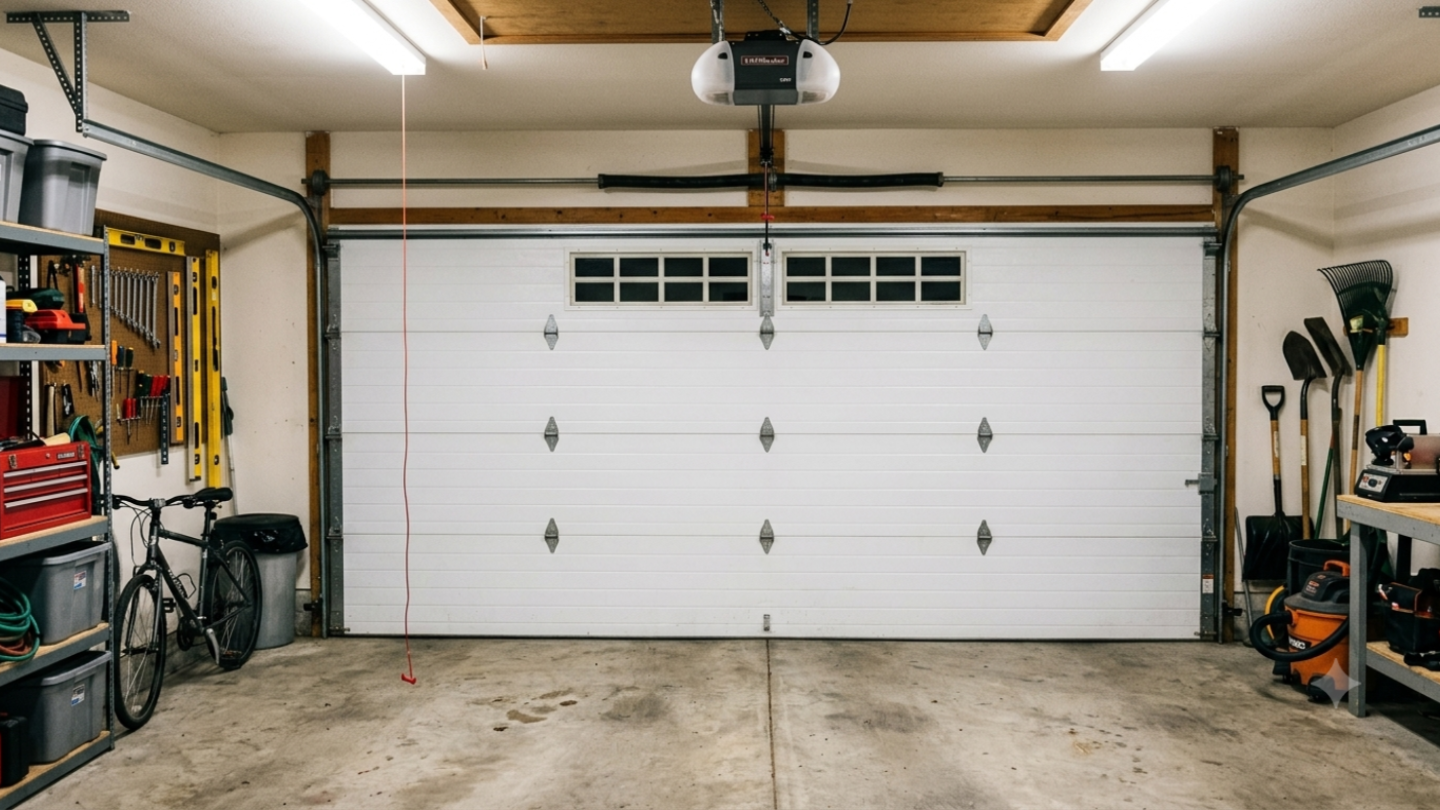
How Long Do Garage Door Parts Actually Last?
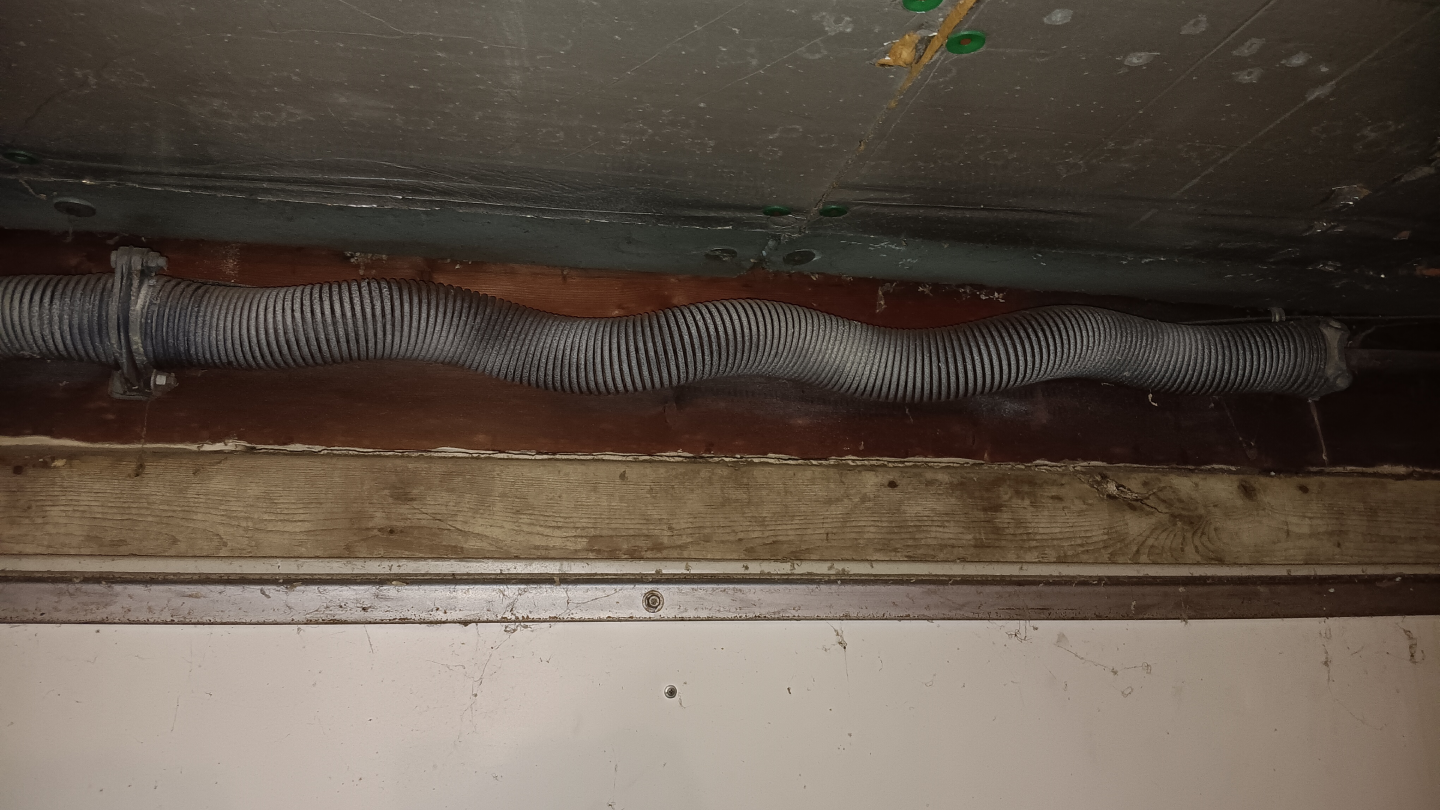
How Much Does Garage Door Spring Replacement Cost in Mt. Pleasant, MI?
The first question most people ask is: what is this going to cost? It's a fair question, and we're going to give you a straight answer!
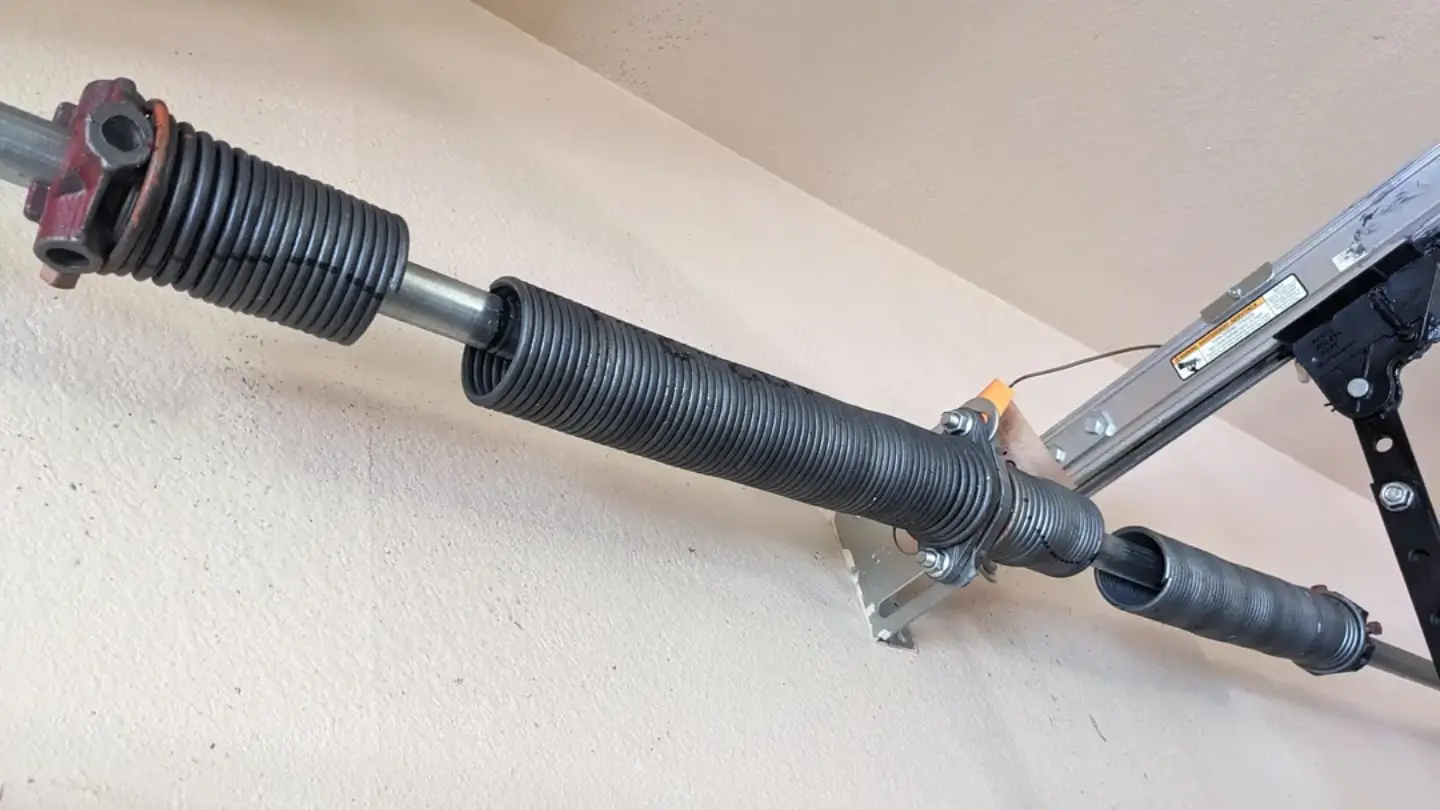
5 Signs Your Garage Door Springs Are About to Break
Your garage door springs do a lot of heavy lifting — literally. Every time your door opens and closes, those springs are under enormous tension, working hard so you don't have to think about it. Most of the time, they're invisible heroes. But when they start to wear out, they usually give you a few warning signs before they go. Here's what to watch for.